


























Lead Reactivation
GHL Pipeline Automation Expert
Leads rarely fall through the cracks due to a lack of interest; they slip away when follow-up activities depend entirely on manual memory.
convert your manual sales process into automated workflows within GHL, guaranteeing every prospective customer is captured, tracked, and nurtured systematically.

AI Lead Recovery
What GoHighLevel Pipeline Automation Does
A GoHighLevel pipeline is a visual representation of your sales funnel from the new lead until closing the deal. Automation will link this visual board to workflows and allow you to make the process happen whenever there is a transition between two stages – send a notification, create a task, add a note, etc. Otherwise, this pipeline is just a manual checklist.
Our job as a GoHighLevel pipeline automation specialist is centered around this link. We analyze how you qualify and convert your leads into customers, then build stages, triggers, and workflows accordingly. It’s perfect for agencies dealing with client pipelines, consultants conducting discovery calls, and services with regular inquiries coming in. It works equally well for teams using GHL and feeling like their configuration has gotten messy.
Problems This Service Helps Address
New leads sit uncontacted because nobody was notified.
Deals stall in one stage with no clear next action.
Follow-up messages go out late, inconsistently, or not at all.
Team members update opportunities in different ways, so reports cannot be trusted.
Manual copying between forms, calendars, and the pipeline eats up hours.
How We Set Up Your Pipeline Automation

Discovery and process mapping :We review your lead sources, sales stages, team roles, and current GHL setup.

Pipeline design: We define stages, names, and exit criteria so each stage means one thing.
Workflow build: Triggers, conditions, messages, assignments, and notifications are configured in GoHighLevel.

Testing: We run test contacts through every path, including edge cases like missed calls or duplicate form submissions.
Handover and refinement: We walk you through the setup and adjust it based on real use.
Lead Recovery
GoHighLevel Lead Reactivation
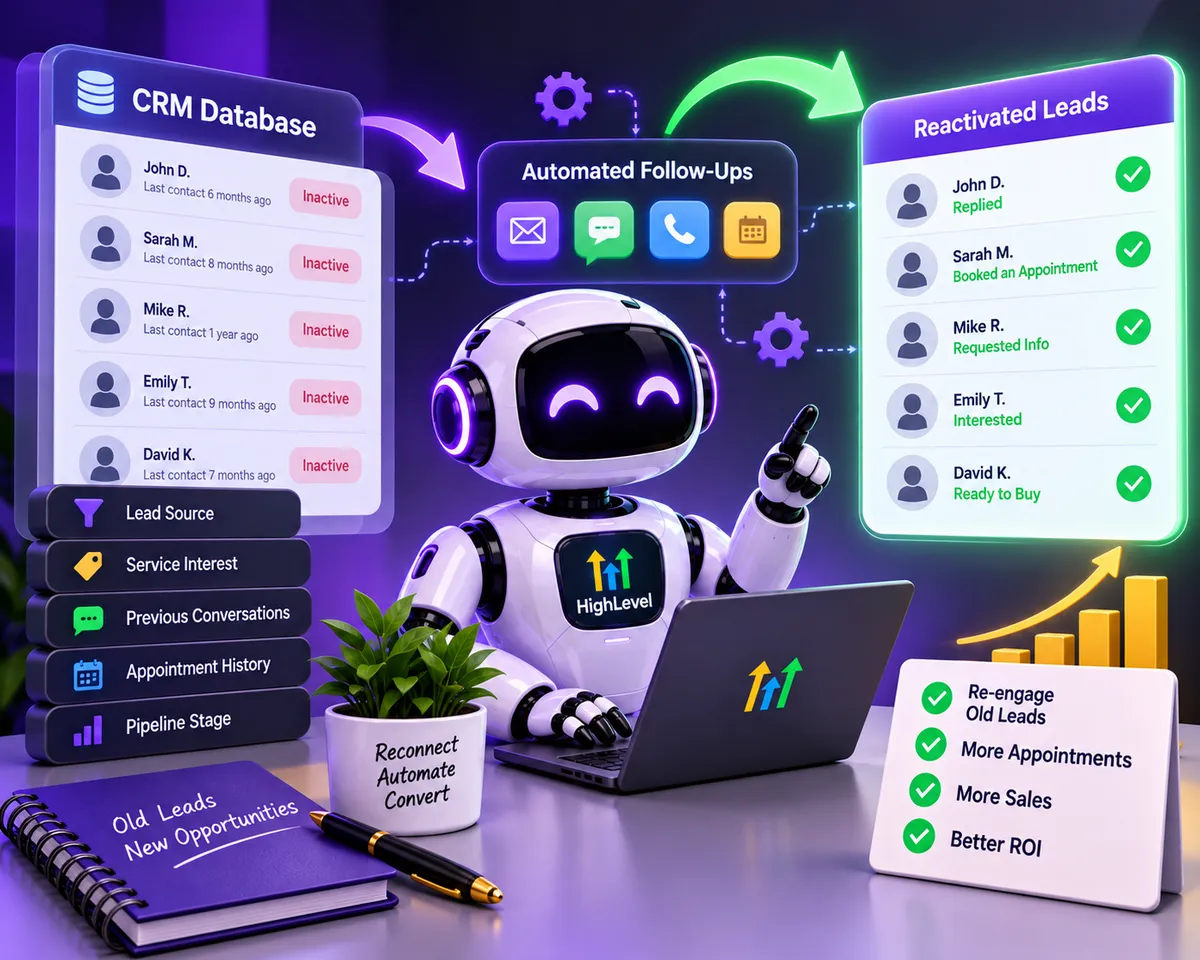
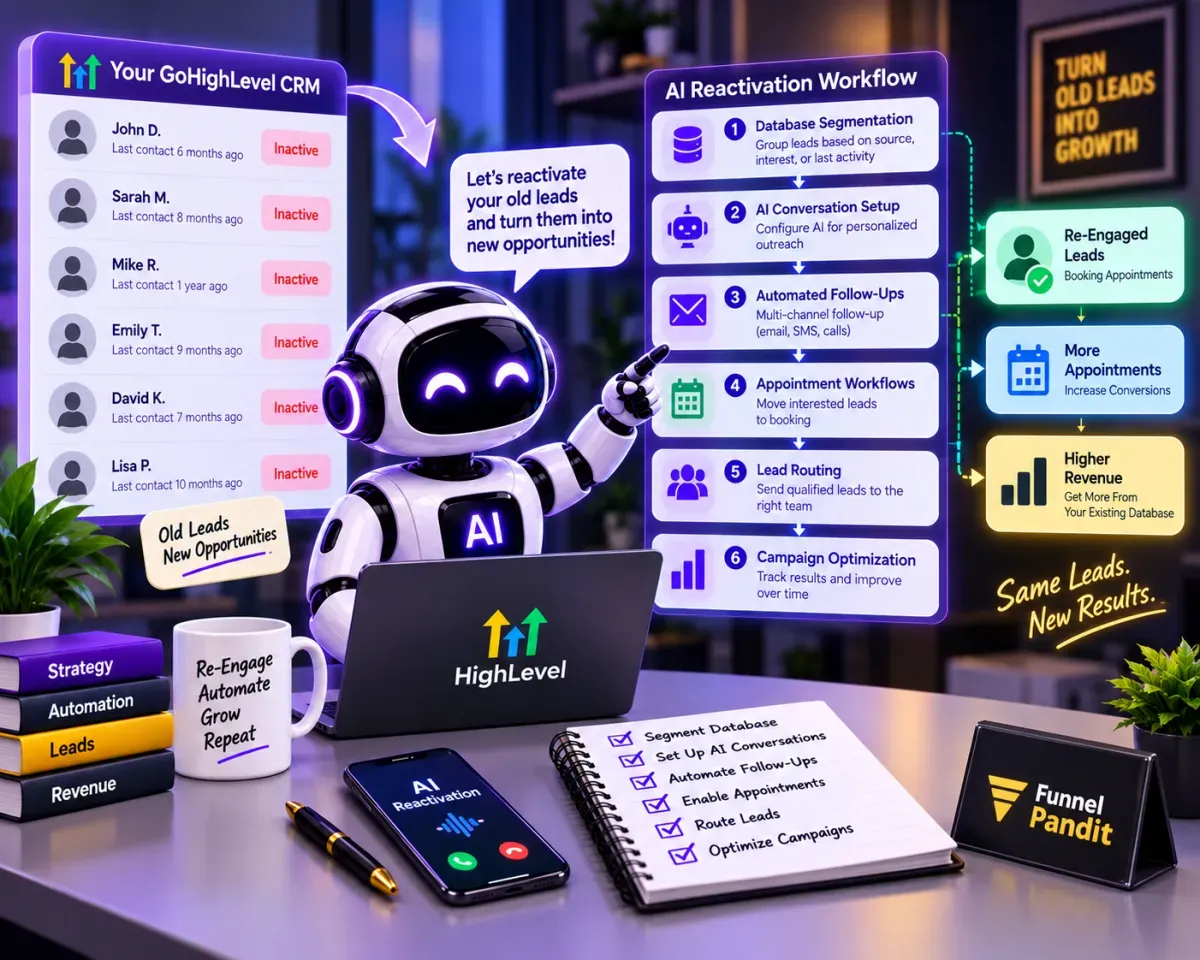
GoHighLevel lead reactivation allows businesses to use their existing CRM database for renewed customer engagement. Old leads can be organized according to factors such as lead source, service interest, previous conversations, appointment history, or pipeline stage.
Once suitable contacts are identified, automated workflows can initiate follow-ups through available communication channels. Leads who respond can then be routed into appropriate sales or appointment workflows.
This creates a structured process for reconnecting with prospects without requiring sales teams to manually contact every inactive contact.
Automated Lead Follow-Up
Old Lead Follow-Up Automation
Old lead follow-up automation is useful for businesses with large databases of previous inquiries. Manually contacting every inactive lead can require significant time, especially when sales teams are already managing new prospects.
With automation, businesses can create structured follow-up sequences for different groups of old leads. Messages can be scheduled based on defined conditions, while responses can trigger different actions.
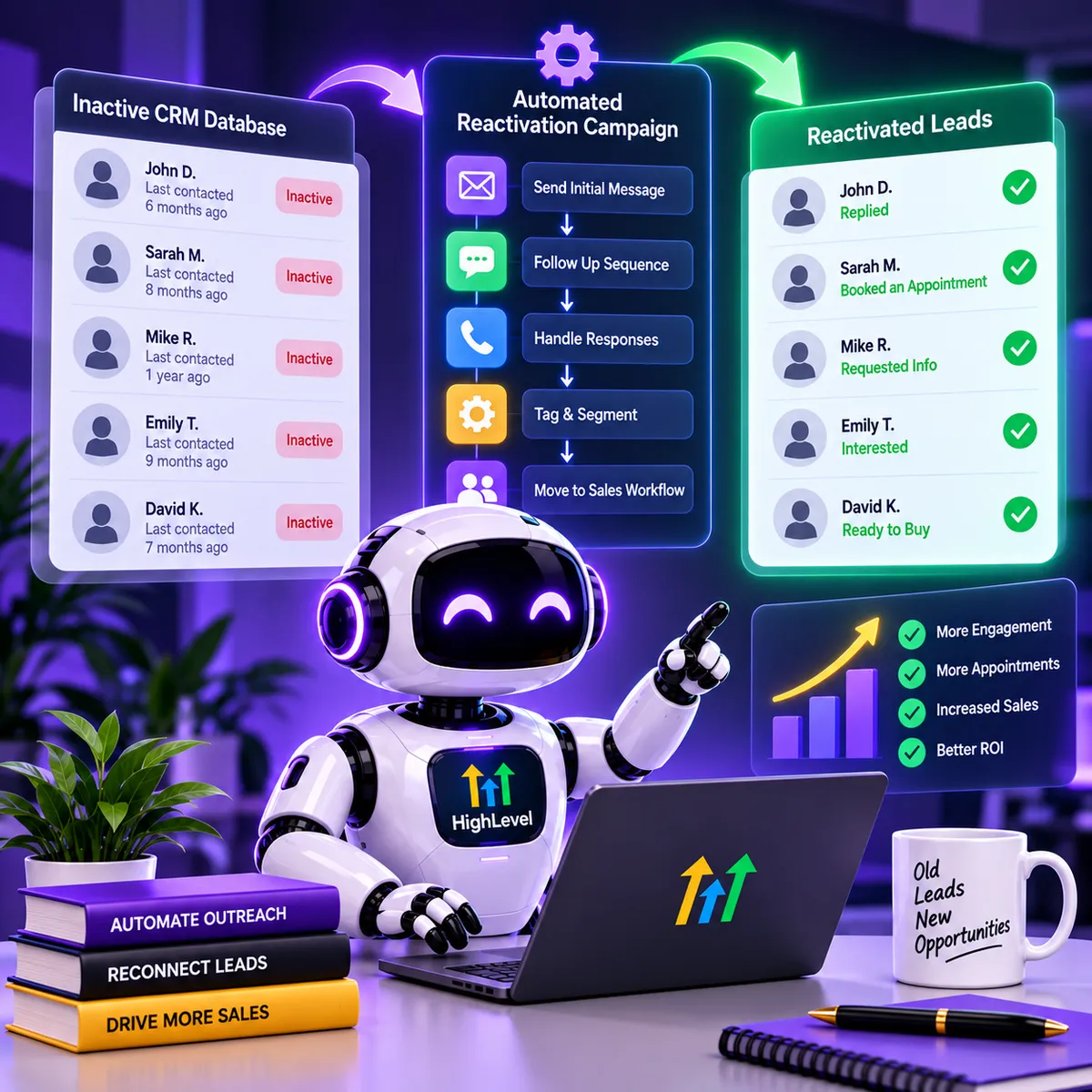
Database Revival
Automated Database Reactivation
An automated database reactivation system can turn an inactive CRM database into an organized outreach campaign. Businesses can define which contacts should be included, establish communication sequences, and set rules for handling responses.
For example, a business may create a campaign for contacts who have not responded for several months. The system can send an initial message, monitor engagement, and continue the conversation when appropriate.
Automation can also help separate engaged contacts from those who remain unresponsive. This allows sales teams to focus their attention on prospects showing current interest.
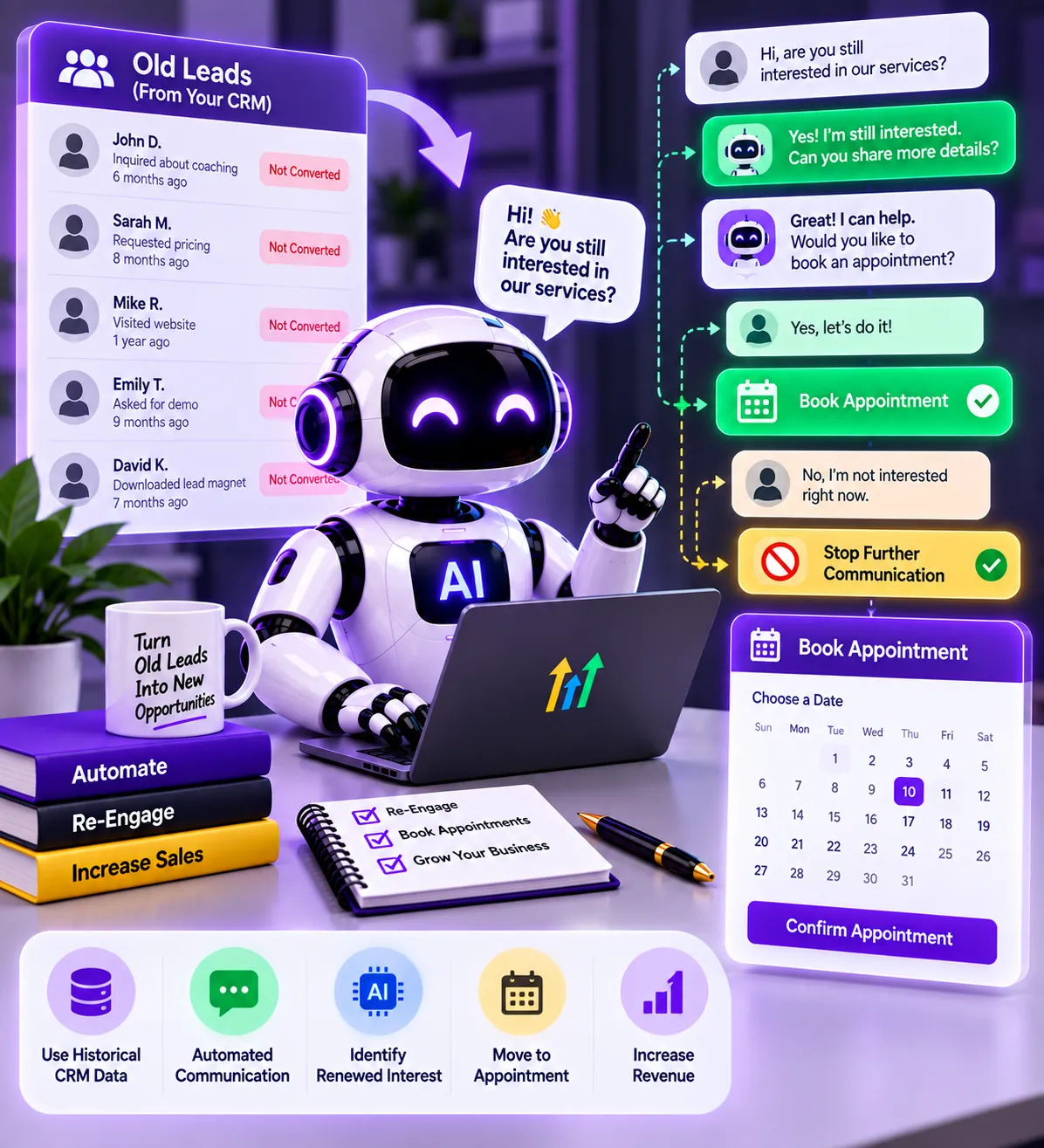
AI Lead Revival
Reactivate Old Leads With AI
Businesses can reactivate old leads with AI by combining historical CRM information with automated communication. AI can help handle initial conversations and identify signals that indicate renewed interest.
For example, a previous prospect may have contacted a company about a service but never booked. A reactivation workflow can reconnect with that prospect and ask whether they are still interested.
If the prospect confirms their interest, the workflow can move them toward an appointment or connect them with a member of the sales team.
The exact conversation should depend on the business, industry, customer history, and communication preferences. Proper configuration is important to ensure that AI responses remain relevant and appropriate.
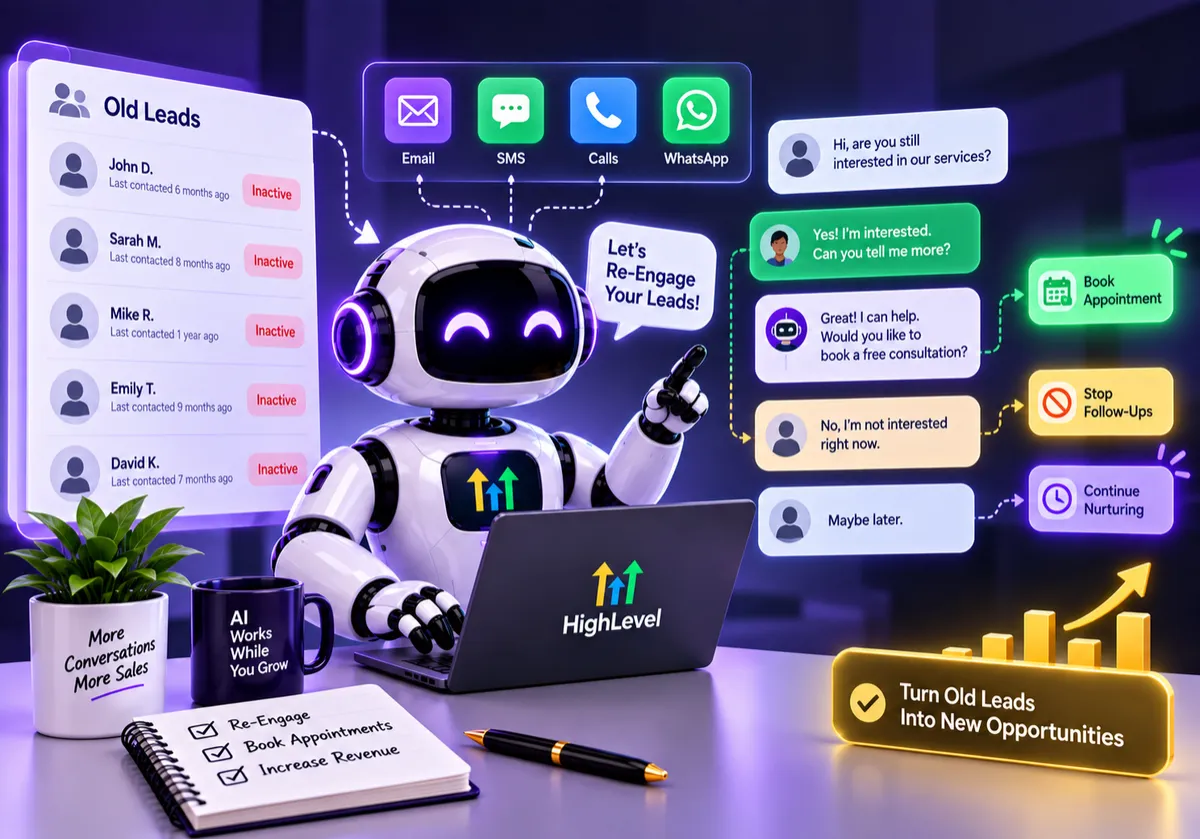
Smart Re-Engagement
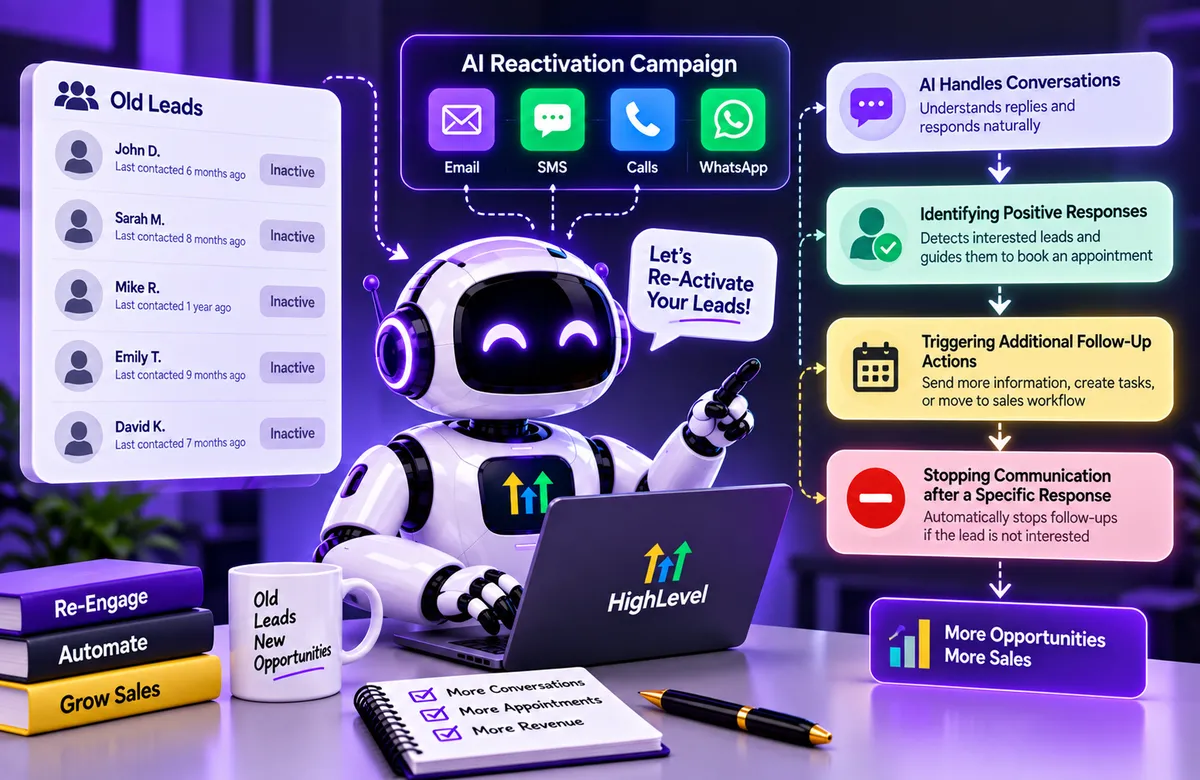
AI Reactivation Campaign
An AI reactivation campaign can make old lead follow-up more conversational and responsive. Instead of relying entirely on fixed messages, AI can assist with understanding replies and continuing conversations based on predefined business instructions.
For example, if an old lead responds that they are interested again, the AI can continue the conversation and guide them toward booking an appointment. If the lead is no longer interested, the workflow can stop further follow-ups according to the configured rules.
Funnel Pandit can help businesses design AI reactivation campaigns around their services, customer journey, and sales process.
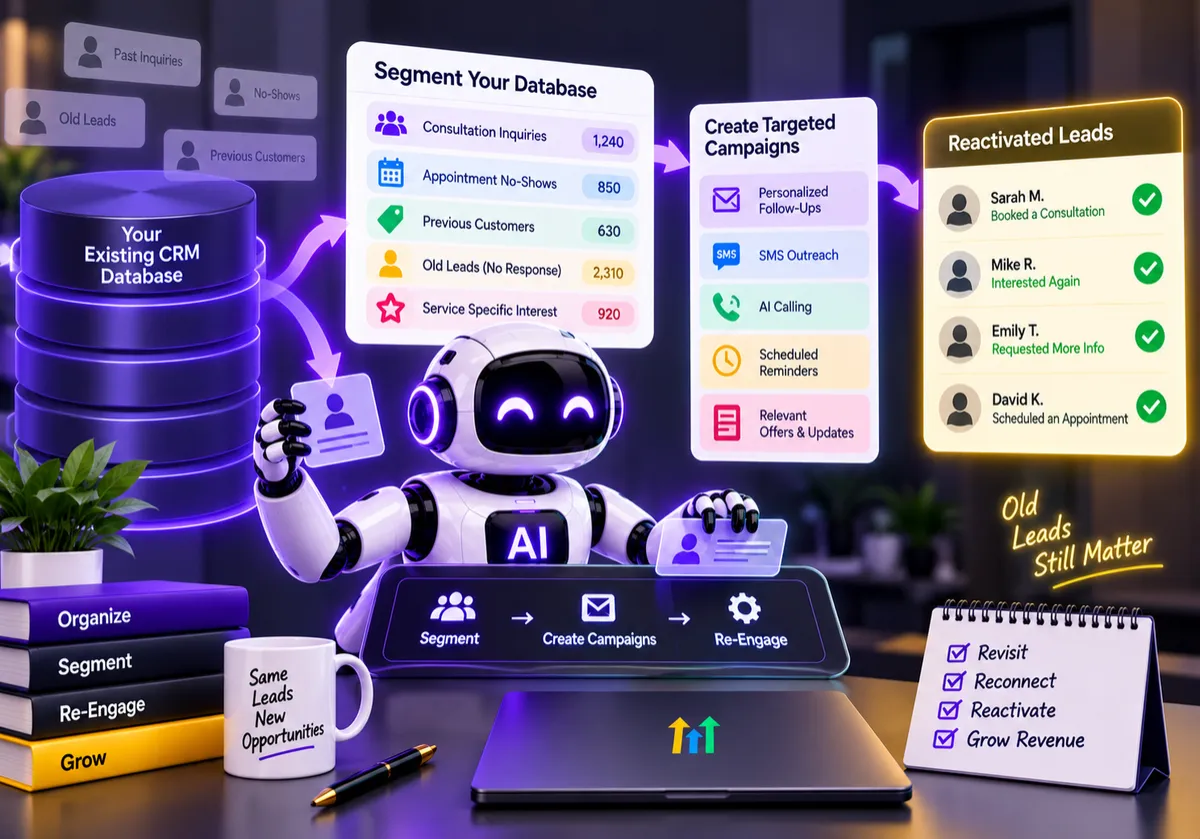
Database Lead Revival
GoHighLevel Database Reactivation
GoHighLevel database reactivation can help businesses make better use of existing CRM contacts. Instead of considering an old lead permanently lost, businesses can create campaigns that periodically identify suitable inactive prospects.
A database can be segmented according to different criteria, allowing businesses to create more relevant campaigns. For example, one campaign could target old consultation inquiries while another could focus on previous appointment no-shows.
Segmentation can make reactivation campaigns more organized and reduce unnecessary communication.
AI Outbound Calling
AI Outbound Calling for Old Leads
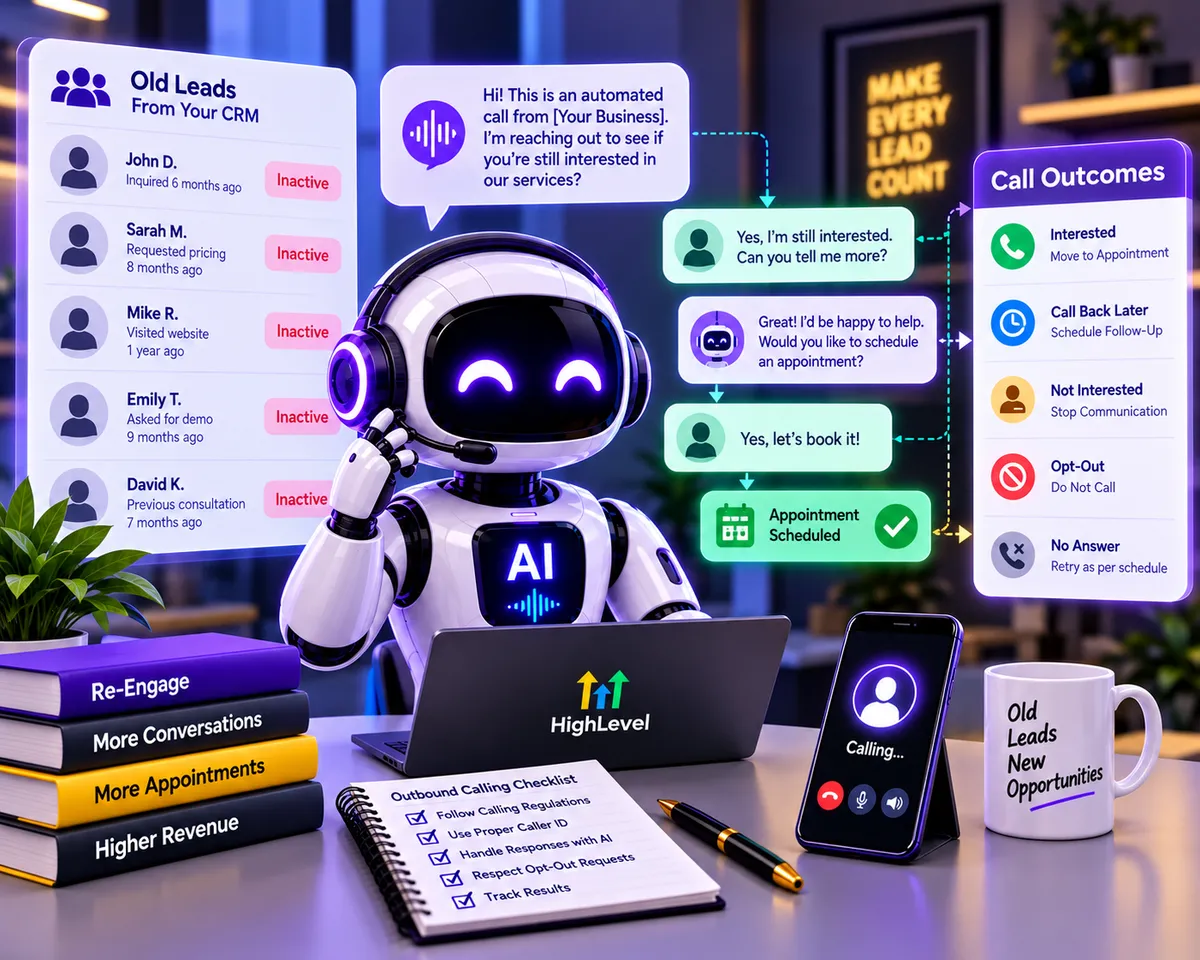
AI outbound calling for old leads can provide another method of reconnecting with inactive prospects. AI-powered calling systems can initiate conversations, answer basic questions, identify interest, and potentially help prospects move toward an appointment.
For businesses receiving a high volume of leads, automated calling can provide a scalable way to revisit older opportunities.
However, AI calling should be configured carefully. Businesses should consider applicable calling regulations, consent requirements, caller identification, opt-out requests, and industry-specific communication rules before launching campaigns.
GHL pipeline
What We Can Automate in Your GHL Pipeline
A structured reactivation strategy can provide several operational benefits.
Use Existing Lead Data
Businesses can work with contacts already stored in their CRM instead of relying entirely on new lead acquisition.

Reduce Manual Follow-Up
Automated workflows can handle repetitive initial outreach and follow-up activities.

Improve Response Management
AI can assist with conversations and route engaged leads toward the appropriate next step.

Support Appointment Booking
Reactivation workflows can connect interested prospects with calendars and appointment processes.

Organize Sales Opportunities
Engaged contacts can be updated, tagged, or moved through the CRM based on their responses.

Reduced Repetitive Work
Automating suitable conversations can reduce the amount of repetitive communication handled manually by sales and support teams.
AI Reactivation Services
Funnel Pandit GoHighLevel AI Reactivation Services
Funnel Pandit helps businesses build practical GoHighLevel AI Lead Reactivation systems around their existing CRM and sales processes.
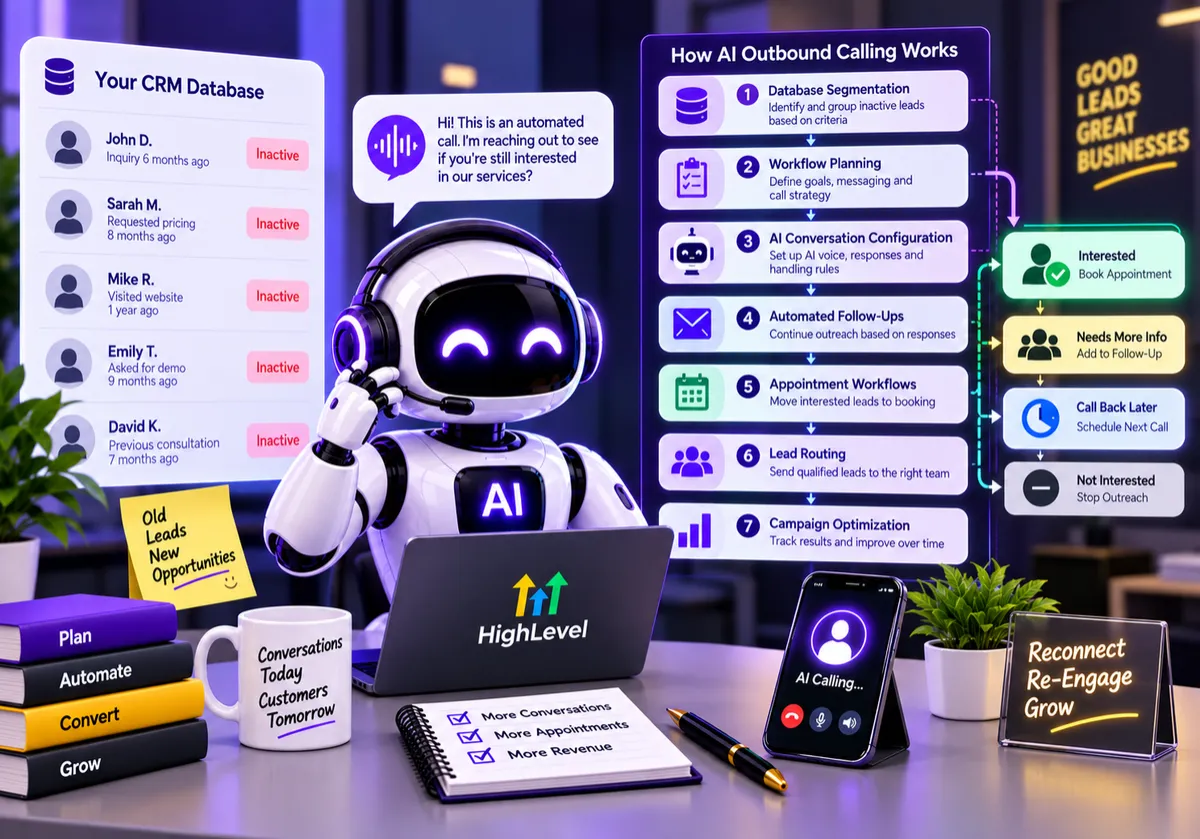
The implementation can include database segmentation, workflow planning, AI conversation configuration, automated follow-ups, appointment workflows, lead routing, and campaign optimization.
Every business has a different database and customer journey. A successful reactivation campaign should therefore be built around the type of leads available, previous interactions, services offered, communication channels, and desired business outcomes.
The focus should be on creating relevant conversations rather than repeatedly contacting inactive prospects with generic messages.
Start Reactivating Leads
Get Started With GoHighLevel AI Lead Reactivation
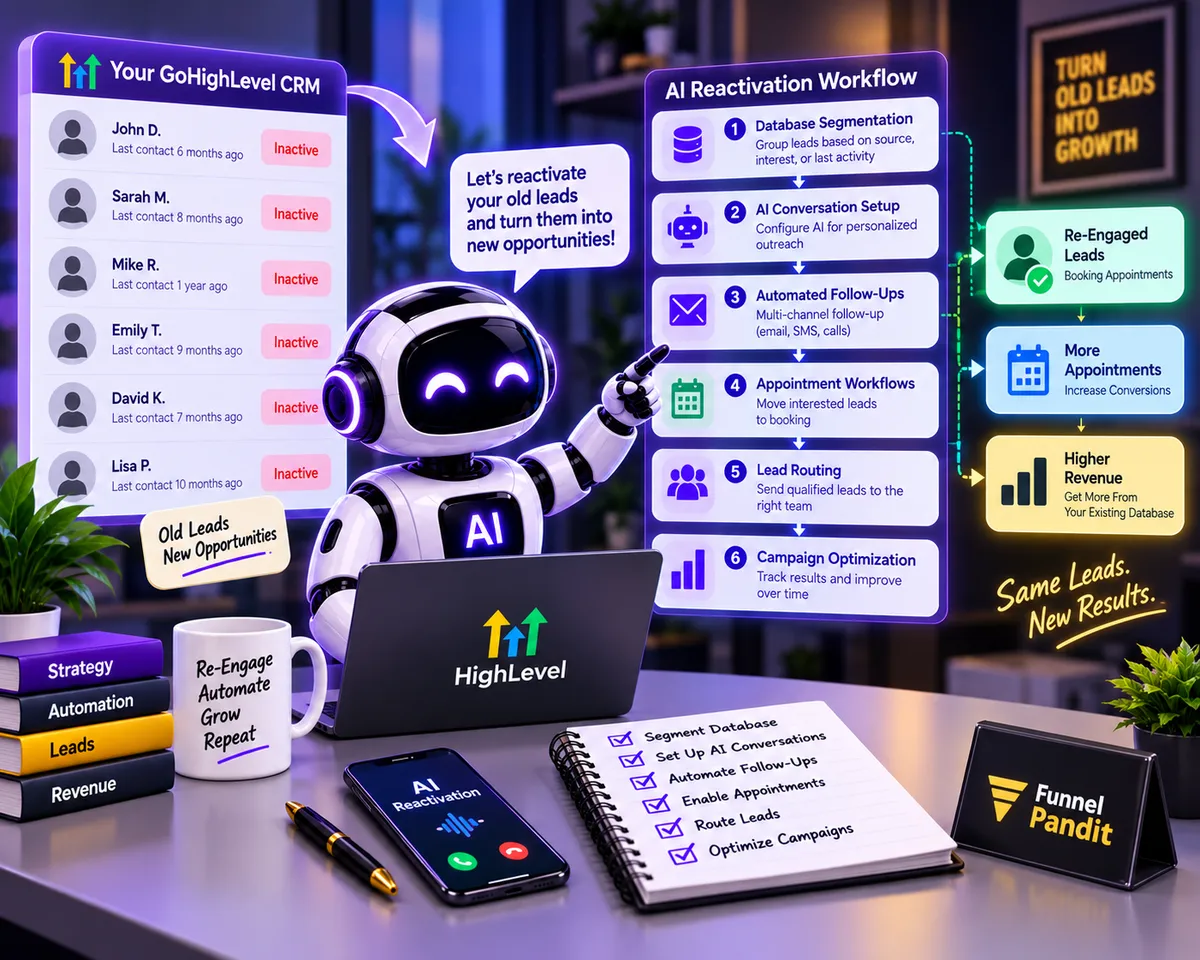
If your GoHighLevel account contains hundreds or thousands of older leads, AI-powered reactivation can provide a structured way to reconnect with suitable prospects.
Funnel Pandit can help businesses plan and implement automated database reactivation, AI conversations, old lead follow-up automation, and outbound calling workflows within their broader GoHighLevel strategy.
With appropriate segmentation, messaging, automation rules, and human handoff processes, your existing database can become an active part of your lead-generation and sales workflow.
FAQ
Frequently Asked Questions
1. What is GoHighLevel AI Lead Reactivation?
It uses GoHighLevel automation and AI to reconnect with older leads and identify prospects who may still be interested.
2. Can GoHighLevel reactivate old leads automatically?
Yes, automated workflows can be configured to contact selected inactive leads and manage follow-up actions.
3. What is automated database reactivation?
It is the process of using automation to reconnect with suitable contacts already stored in a CRM database.
4. Can AI handle conversations with old leads?
Yes, AI can assist with conversations based on configured instructions, business information, and workflow rules.
5. Can AI reactivation campaigns book appointments?
Yes, interested leads can be guided toward appointment scheduling when the required calendar and workflow integrations are configured.
6. What is GoHighLevel database reactivation?
It involves using GoHighLevel CRM data and automation to reconnect with inactive or older prospects.
7. Can old leads be contacted through AI calling?
AI-powered outbound calling can be used where the relevant technology, consent, and applicable communication requirements are properly addressed.
8. Is lead reactivation useful for small businesses?
It can be useful for businesses with an existing database of previous inquiries or inactive prospects.
9. Does Funnel Pandit provide AI reactivation setup?
Funnel Pandit can help businesses plan and implement GoHighLevel AI reactivation workflows and related automation.
10. How should I start a reactivation campaign?
Start by reviewing your database, segmenting suitable leads, defining the communication strategy, and creating appropriate automation and follow-up rules.

Are You Looking?
Looking for a reliable and cost-efficient web developer? You have got all the business ideas but looking for an extra push in web designing and technical knowledge? Well, here we are!
Address
140 Mohalla Pataytan Lawar, Daurala, Meerut, Utter Pradesh, India 250222


© Copyright Funnel Pandit. All Rights Reserved 2026