






















How to Use Social Media to Promote and Sell Online Courses
How to Use Social Media to Promote and Sell Online Courses
Creating a great online course is only half the job.
The other half is getting the right people to discover it, trust your expertise, and eventually enroll.
Social media can help at every stage of that journey.
Platforms such as Instagram, Facebook, LinkedIn, YouTube, and TikTok allow course creators, coaches, educators, and training businesses to build an audience, demonstrate expertise, generate leads, retarget interested prospects, and promote courses to people who are more likely to buy.
But simply posting promotional graphics with “Enroll Now” every few days usually isn’t enough.
Successful social media marketing for online courses requires the right platform, useful content, consistent audience engagement, strategic promotion, and a clear path from follower to student.
This guide explains how to use social media to promote online courses effectively-from choosing the right platforms and building pre-launch interest to paid advertising, video marketing, testimonials, lead generation, and conversion tracking.
What Is Social Media Marketing for Online Courses?

Social media marketing for online courses is the process of using social platforms to build an audience, demonstrate expertise, generate interest, attract leads, and convert potential students into course enrollments.
A complete strategy can include organic content, short-form videos, educational posts, community participation, student testimonials, live sessions, lead magnets, paid advertising, retargeting, and launch campaigns.
The objective isn’t simply to gain followers.
It is to build a journey that moves the right audience from:
Discovery → Interest → Trust → Lead → Enrollment
Here’s how to build that strategy.
Also Read👉 Struggling with Unclear Social Media Goals?
1. Choose the Right Social Media Platforms
One of the biggest mistakes course creators make is trying to be active everywhere.
You probably don’t need to post consistently on Instagram, Facebook, LinkedIn, TikTok, YouTube, X, Pinterest, and every new platform simultaneously.
Instead, focus on where your ideal students already spend their time and how they consume information.
Different platforms serve different audiences and content behaviors.
Useful for visual education, Reels, Stories, carousels, creator-led brands, lifestyle topics, coaching, fitness, beauty, personal development, and many B2C courses.
Can be valuable for communities, Groups, live sessions, remarketing, and reaching certain established or interest-based audiences.
Particularly relevant for professional education, B2B training, leadership, career development, marketing, sales, technology, HR, and executive-focused courses.
YouTube
Strong for educational discovery, tutorials, demonstrations, webinars, long-form expertise, Shorts, and evergreen searchable video content.
TikTok
Useful for short-form educational discovery, personality-led content, demonstrations, quick tips, and reaching audiences that actively consume short-form video.
Your choice should depend on:
Who your ideal student is
Their age and professional profile
Their interests
Where they spend time online
What type of content they consume
Whether your course is B2B or B2C
Your available content-production resources
Start with one or two primary platforms.
Build a repeatable system there before expanding.
2. Optimize Your Social Profiles for Course Discovery
Before publishing more content, optimize your profiles.
Someone discovering you through a Reel, video, comment, advertisement, or shared post may visit your profile before taking any further action.
Within seconds, they should understand:
Who are you?
Who do you help?
What can they learn from you?
What should they do next?
Your profile should include:
A recognizable profile image or logo
Clear positioning
A concise description of your expertise
Your course or primary offer where appropriate
A relevant link or landing page
Consistent branding
A clear call to action
Instead of writing a generic bio such as:
“Helping people achieve their dreams.”
Be specific.
For example:
“Helping first-time managers become confident team leaders through practical leadership training.”
Specific positioning makes it easier for the right people to recognize that your content and course are relevant to them.
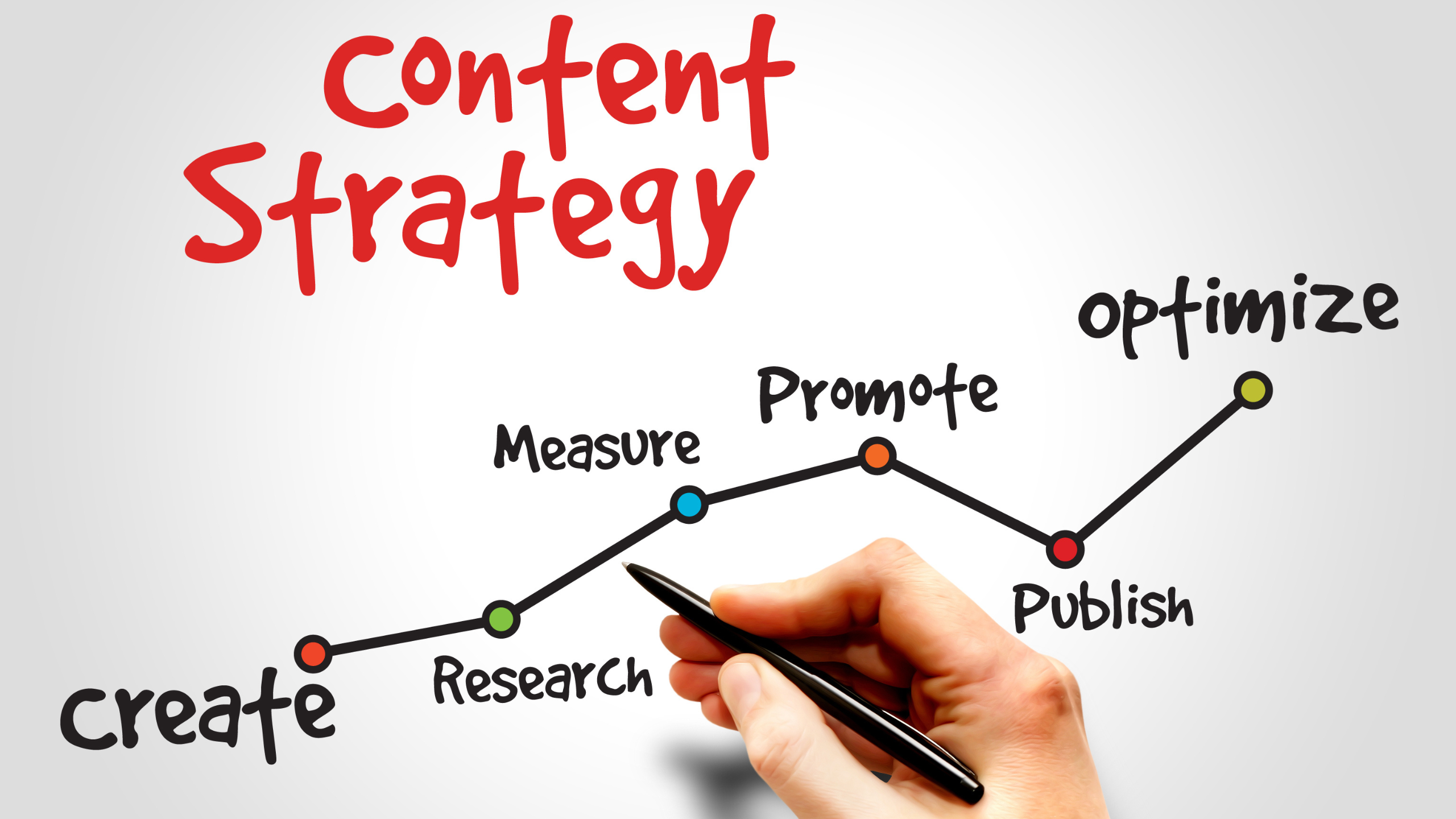
3. Create Content Your Ideal Students Actually Need
If every post says:
“Buy my course.”
“Enroll today.”
“Limited seats.”
“Join now.”
your audience will eventually stop paying attention.
Social media should create demand before asking for the sale.
A useful content strategy answers the questions your potential students have before purchasing.
Suppose you sell a digital marketing course.
Your content could cover:
Common Google Ads mistakes
How SEO works
Beginner marketing career advice
Campaign breakdowns
Marketing tools
Real-world examples
Industry misconceptions
Mini tutorials
Someone repeatedly learning useful things from you begins associating your brand with expertise.
When they eventually decide they need structured training, your course becomes a more natural option.
A useful content mix can include:
Educational posts
Short tutorials
How-to videos
Mistakes to avoid
Checklists
Case studies
Student stories
Behind-the-scenes content
FAQs
Industry opinions
Polls and questions
Course previews
Promotion still matters.
It simply shouldn’t be the only thing you publish.
4. Turn One Course into Multiple Pieces of Social Content
You don’t always need to create social content from scratch.
Your course already contains valuable intellectual property.
One lesson can potentially become:
A short-form video
An Instagram carousel
A LinkedIn post
A YouTube Short
A checklist
A quote or insight graphic
An email
A discussion question
A longer YouTube video
For example, imagine your course contains a lesson:
“5 Mistakes Beginners Make with Facebook Ads.”
That lesson could become five separate short videos—one around each mistake.
It could also become a carousel summarizing all five.
Then a longer video could explain the complete framework.
Each piece can lead interested users toward the full course.
This is much more efficient than treating your course and social media content as completely separate systems.
5. Use Short-Form Video to Demonstrate Expertise
Video is particularly useful for selling education because potential students can experience your teaching style before buying.
Use short-form video to provide a small but genuinely useful result.
For example:
Instead of:
“Join my Excel course today.”
Create:
“Here’s an Excel formula that can save you 20 minutes every week.”
Teach the solution.
Then connect it naturally to the larger learning opportunity.
Your videos can include:
Quick lessons
Common mistakes
Before-and-after examples
Myth vs. fact
Mini demonstrations
Student questions
Course previews
Behind-the-scenes clips
Case-study breakdowns
The objective is to make viewers think:
“If I’m learning this much for free, the complete course could be valuable.”
6. Build Interest Before Launching Your Course
Course promotion shouldn’t begin on launch day.
Start building awareness before enrollment opens.
A pre-launch campaign can create curiosity while also helping validate demand.
You might share:
Why you’re creating the course
The problem it solves
Behind-the-scenes development
Lesson previews
Curriculum snippets
Common audience problems
Polls about course topics
Instructor introductions
Early-access opportunities
Launch countdowns
You can also create a waitlist.
Instead of hoping people remember your launch date, collect contact information from interested prospects.
For example:
“Join the early-access list and be the first to know when enrollment opens.”
Now you have an audience you can contact directly when the course launches.
7. Build an Email List from Social Media
Social followers are valuable, but you don’t control the platform.
Algorithms change.
Organic reach fluctuates.
Accounts can lose visibility.
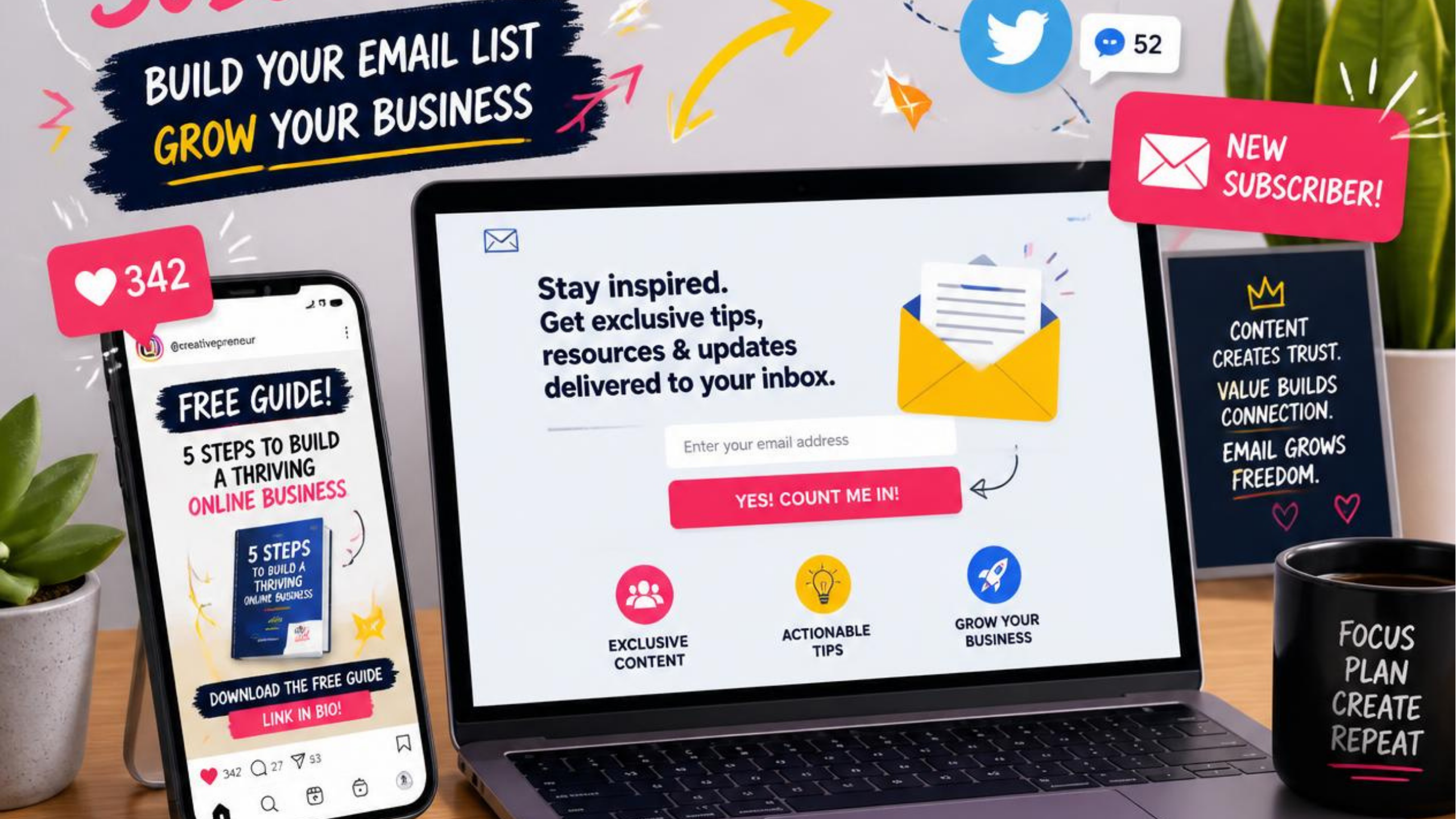
That’s why social media should ideally help you build an audience you can reach directly.
One effective approach is offering a lead magnet related to your course.
Examples include:
Free checklist
Template
Mini course
Webinar
Workbook
Assessment
Cheat sheet
Free lesson
Resource library
Suppose you sell an SEO course.
You could offer:
The funnel becomes:
Social Content → Free Resource → Email Subscriber → Nurture → Course Offer
This gives potential students time to learn from you and develop trust before being asked to purchase.
8. Participate in Relevant Communities Without Spamming
Online communities can help you understand and reach your target audience.
Depending on your niche, relevant communities may exist through:
Facebook Groups
LinkedIn Groups
Reddit communities
Professional communities
Industry forums
Creator communities
But joining a community simply to drop course links is usually ineffective and may violate community rules.
Instead:
Answer questions.
Share useful experiences.
Participate in discussions.
Understand recurring problems.
Become recognizable for your expertise.
If someone asks:
“How do I solve this problem?”
Give them a genuinely useful answer.
When appropriate and permitted, you can then mention a relevant resource or course.
Authority built through contribution is more valuable than aggressive self-promotion.
9. Use Student Testimonials and Success Stories

Potential students naturally wonder:
Will this course actually help me?
Testimonials and case studies can reduce that uncertainty.
Instead of only saying:
“Our course is amazing.”
Show evidence from people who have experienced it.
Useful social proof can include:
Video testimonials
Written reviews
Student success stories
Before-and-after outcomes
Screenshots of feedback
Project results
Career outcomes where appropriate
Specific skills students gained
Specific testimonials are generally stronger than vague praise.
For example:
“This course was great.”
is less informative than:
“After completing the course, I was able to build my first complete Google Ads campaign independently.”
Always obtain appropriate permission before publishing identifiable student feedback or results.
And avoid presenting exceptional outcomes as guaranteed results.
10. Host Live Sessions, Webinars, and Q&As
Live content can accelerate trust because potential students interact directly with the instructor or brand.
You can host:
Live Q&A sessions
Mini workshops
Webinars
Course previews
Demonstrations
AMA sessions
Topic-specific training
For example:
If you sell a career development course, you could host:
“Live Workshop: 5 Mistakes That Make Your Resume Easy to Ignore.”
Teach something genuinely useful.
Then, toward the end, explain how people who want deeper structured learning can continue through your course.
This follows a simple principle:
Teach first. Offer second.
11. Encourage Conversations Instead of Broadcasting
Social media works best as a two-way channel.
Don’t only publish.
Ask.
Listen.
Respond.
Useful engagement formats include:
Polls
Questions
Quizzes
“Which one describes you?” posts
Ask-me-anything sessions
Comment prompts
Live Q&As
Suppose you’re building a public-speaking course.
You might ask:
“What makes you most nervous about public speaking?”
The answers could reveal:
Fear of forgetting words
Lack of confidence
Stage anxiety
Difficulty structuring presentations
Now you have both engagement and market research.
Those responses can influence future posts, course lessons, sales copy, FAQs, and advertisements.
12. Offer a Free Course Preview or Mini-Lesson
Buying an online course requires trust.
Potential students may wonder:
Is the instructor good?
Is the teaching easy to understand?
Is the content practical?
Is the course right for my level?
Is it worth the investment?
A free preview can answer some of those questions.
Depending on your course model, you could offer:
One free lesson
A short mini course
A sample module
A live workshop
A course demo
A preview video
The free content should provide genuine value while naturally showing what the complete program offers.
Think of it as:
Experience before commitment.
13. Use Paid Social Advertising Strategically
Organic social media can build trust and awareness, but paid advertising can help scale distribution beyond your existing audience.
Paid campaigns can support several objectives:
Course sales
Lead generation
Webinar registrations
Free resource downloads
Waitlist signups
Retargeting
Video views and awareness
However, avoid immediately showing a cold audience:
“Buy my ₹20,000 course.”
For many courses, a funnel-based approach can work better.
For example:
Ad → Free Webinar → Email Follow-Up → Course Offer
or:
Educational Video → Retarget Engaged Viewers → Course Sales Page
or:
Lead Magnet → Email Nurture → Course Launch
The right funnel depends on your course price, audience awareness, sales cycle, and existing brand authority.
14. Retarget People Who Already Know Your Brand
Not everyone buys the first time they discover your course.
Someone may:
Watch your video.
Visit your sales page.
Read your content.
Join a webinar.
Then leave without enrolling.
Retargeting allows you to reconnect with relevant audiences who have already interacted with your brand, subject to the advertising platform’s available targeting options and applicable privacy requirements.
Retargeting campaigns might feature:
Student testimonials
Course benefits
FAQs
Instructor credibility
Course previews
Enrollment deadlines
Objection-handling content
Warm audiences often require different messaging from people who have never heard of you.
A cold audience may need education.
A warm audience may need proof.
A high-intent visitor may simply need clarity about whether the course is right for them.
15. Match Your Content to the Student Journey
Not every follower is equally ready to buy.
Your content should support different stages of awareness.
Stage 1: Problem Awareness
The person recognizes a problem.
Create:
Educational content
Mistakes
Tips
Problem-focused videos
Stage 2: Solution Awareness
They know solutions exist.
Create:
Frameworks
Tutorials
Comparisons
Webinars
Guides
Stage 3: Course Consideration
They are evaluating your course.
Create:
Testimonials
Curriculum previews
Instructor credibility
FAQs
Demo lessons
Case studies
Stage 4: Purchase Decision
They are close to enrolling.
Provide:
Clear pricing
Enrollment details
Course outcomes
Support information
Refund/cancellation terms
Enrollment deadlines were genuine
Strong calls to action
This prevents your entire social strategy from becoming one repetitive sales pitch.
16. Create a Simple Social Media Funnel for Your Online Course
Posting without a conversion path can generate views without generating students.
Build a clear funnel.
One example is:
Social Content
↓
Lead Magnet or Free Training
↓
Email Follow-Up
↓
Course Sales Page
↓
Enrollment
↓
Student Experience
↓
Testimonial / Referral
Your social posts attract attention.
Your free resource captures leads.
Your email sequence builds trust.
Your sales page explains the offer.
Your course delivers the promised value.
Satisfied students then create reviews, testimonials, referrals, and social proof that can support future marketing.
This creates a repeatable acquisition cycle instead of relying on random posts.
17. Track Metrics That Actually Matter

Likes and followers can be useful indicators, but they don’t necessarily mean your course marketing is profitable.
Track metrics across the complete funnel.
Content Metrics
Reach
Watch time
Saves
Shares
Comments
Profile visits
Traffic Metrics
Link clicks
Landing page visits
Cost per click
Lead Metrics
Leads generated
Landing page conversion rate
Cost per lead
Webinar registrations
Sales Metrics
Course purchases
Sales conversion rate
Cost per acquisition
Revenue
Return on ad spend where applicable
The objective isn’t:
“Get more likes.”
It is:
“Understand which content and campaigns contribute to qualified leads and course enrollments.”
Common Mistakes When Promoting Online Courses on Social Media
Being Too Promotional
If every post asks people to buy, engagement and trust can decline.
Teach and provide value before repeatedly asking for a sale.
Trying to Be Everywhere
Two well-managed platforms are often more effective than six neglected profiles.
Buying Followers
Follower count means little if the audience has no interest in your course.
Posting Without a Funnel
Views without a next step rarely create predictable revenue.
Ignoring Email Marketing
Social media is excellent for discovery, but email gives you a direct channel for nurturing interested prospects.
Using the Same Content Identically Everywhere
Repurpose the core idea, but adapt the format and presentation to each platform.
Focusing Only on Follower Count
A small, highly relevant audience can generate more course sales than a large but poorly targeted following.
Running Ads Without Tracking
If you don’t track leads, purchases, and acquisition costs, you won’t know whether your advertising is actually working.
How Funnel Pandit Helps Promote Online Courses
Promoting an online course effectively requires more than scheduling social posts.
You need to connect content, audience targeting, lead generation, paid advertising, landing pages, follow-up, and conversion tracking into one acquisition system.
Funnel Pandit helps coaches, course creators, educators, and training businesses build digital marketing strategies focused on generating measurable growth.
Depending on your business and course model, the strategy can include:
Social media marketing strategy
Content planning
Paid social advertising
Lead generation campaigns
Sales funnel strategy
Landing page optimization
Retargeting
Email follow-up strategy
Conversion tracking
SEO and organic search
Performance analysis and optimization
The objective is not simply to generate more followers.
It is to build a system that helps turn relevant audiences into leads and ultimately paying students.
Get a Free Marketing Strategy for Your Online Course
Frequently Asked Questions
Q. Which social media platform is best for promoting online courses?
There is no single best platform for every course. The right choice depends on your target audience, course topic, content format, and whether you sell to consumers or businesses. Instagram and TikTok can work well for short-form visual education, LinkedIn can be useful for professional and B2B training, Facebook for community, while YouTube is particularly strong for educational and searchable video content.
Q. How do I promote an online course on social media?
Start by identifying where your ideal students spend time, optimize your profiles, create useful educational content, use videos and course previews, collect leads through free resources, share genuine student testimonials, engage with your audience, and direct interested prospects into a clear enrollment funnel.
Q. Can I sell an online course without paid ads?
Yes. Courses can be promoted through organic social media, SEO, YouTube, email marketing, partnerships, communities, referrals, and existing audiences. Paid advertising can help accelerate reach and scale campaigns, but it is not the only way to generate course sales.
Q. How often should I promote my course on social media?
There is no universal posting frequency. Focus on consistency and content quality rather than posting purely to meet a number. Your content mix should include education, engagement, social proof, and promotion so your audience receives value instead of seeing continuous sales messages.
Q.What type of social media content works best for online courses?
Useful formats include short tutorials, educational videos, carousels, common mistakes, checklists, student success stories, live Q&As, webinars, behind-the-scenes content, course previews, and answers to frequently asked questions. The best content directly addresses problems your ideal students already care about.
Q. Should I offer a free course preview?
A free lesson, demo, mini-course, or workshop can reduce uncertainty by allowing potential students to experience your teaching style and content quality before purchasing. The preview should provide genuine value while clearly showing how the complete course goes deeper.
Q. How can I use student testimonials to promote my course?
Share genuine testimonials through videos, written reviews, case studies, social posts, and your sales page. Specific testimonials that explain what a student learned or achieved are usually more useful than generic praise. Always obtain appropriate permission and avoid implying that individual results are guaranteed.
Q. Are Facebook and Instagram ads effective for selling online courses?
They can be effective when the offer, targeting, creative, funnel, tracking, and economics work together. For higher-priced or unfamiliar courses, generating a lead through a webinar, free resource, or other value-first offer before asking for a purchase may perform better than sending every cold visitor directly to checkout.
Q. How can I turn social media followers into course students?
Give followers a clear next step. Move interested people from educational social content into a lead magnet, webinar, free lesson, email list, or course sales page. Continue building trust through useful content, testimonials, FAQs, and follow-up until they are ready to make a decision.
Q. What metrics should I track when promoting an online course?
Track more than followers and likes. Important metrics can include reach, watch time, clicks, landing page conversion rate, leads, cost per lead, course purchases, sales conversion rate, customer acquisition cost, revenue, and return on ad spend. These metrics show whether your social activity is contributing to actual business growth.
Final Thoughts: Turn Social Media Attention into Course Enrollments
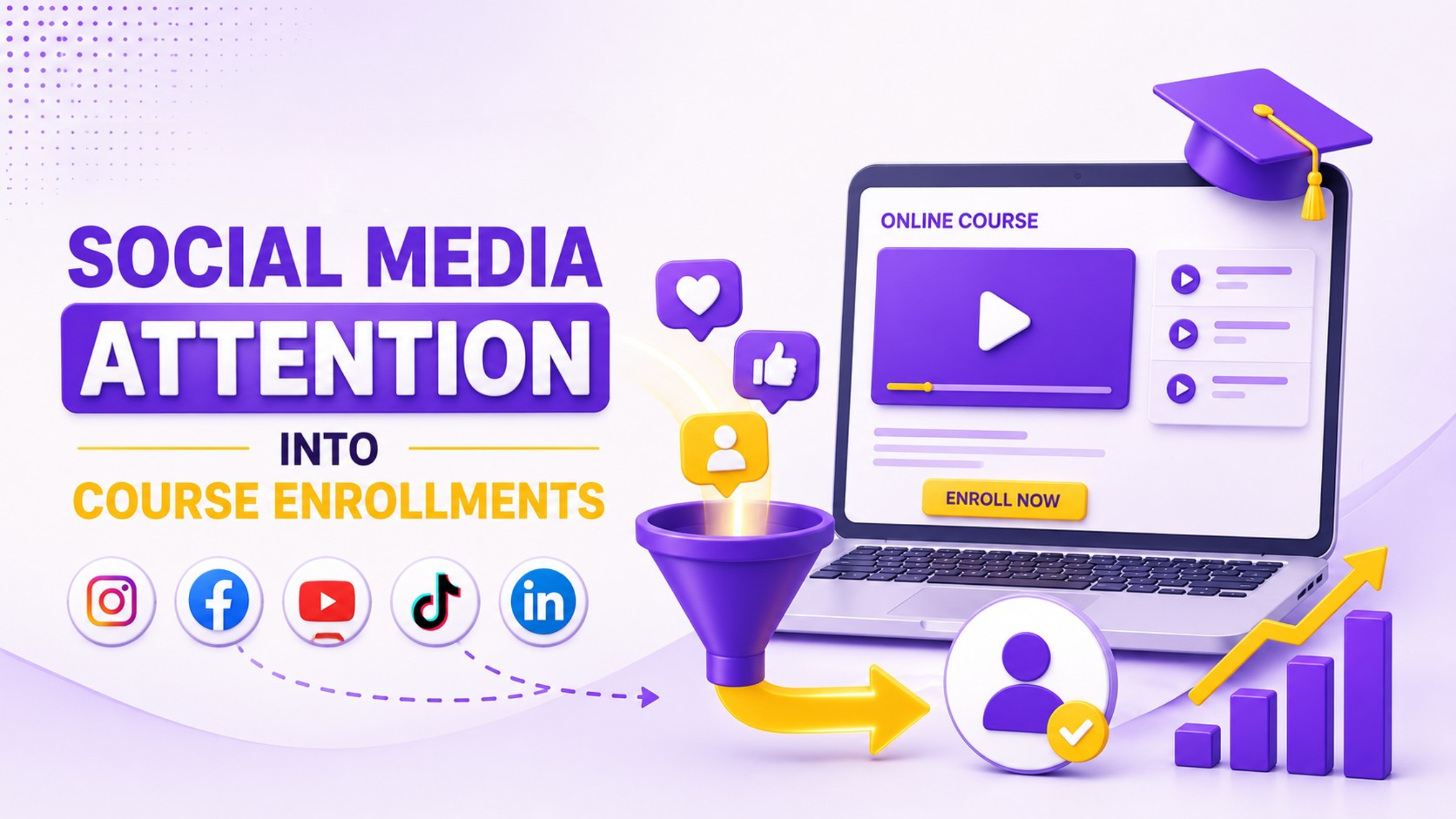
Social media can be a powerful channel for promoting online courses, but success rarely comes from repeatedly posting promotional graphics.
The strongest strategy connects:
Useful Content + Audience Engagement + Trust + Lead Generation + Follow-Up + Conversion
Choose the platforms where your ideal students are active.
Teach before you sell.
Repurpose your course knowledge into useful content.
Use video to demonstrate your expertise.
Build an email list.
Show genuine student results.
Use paid advertising strategically when appropriate.
Retarget interested prospects.
And measure success based on leads, enrollments, and revenue-not just followers.
When these pieces work together, social media becomes more than a content channel.
It becomes part of a measurable student acquisition system.