


























AI Agents in Marketing 2027: What Coaches Must Prepare
AI Agents in Marketing 2027: What Coaches & Agencies Should Actually Prepare For
Most coaches and agency owners I speak with are still treating AI like a smarter content writer. They ask it to draft emails, rewrite sales pages, or generate social posts. That approach worked in 2024 and 2025. In 2027, it will feel incomplete.
The true revolution taking place right now is from the creation of AI that works for you to creating AI that works for itself. AI agents are referred to as systems that can set a goal, make a plan, perform actions on tools, and improve through limited human interaction.
The signs of this transformation are being seen in platforms like GoHighLevel after Level Up 2026, as well as in the industry research being done by Gartner, Adobe, and more. No longer is it a matter of wondering if AI agents are going to be important. It's a matter of preparing for them in such a way that you don't lose control of your brand, client experience, or data.
What Is Actually Changing
In the last 18 months, most marketing AI tools focused on generation: text, images, short videos, and basic personalization. Useful, but limited.
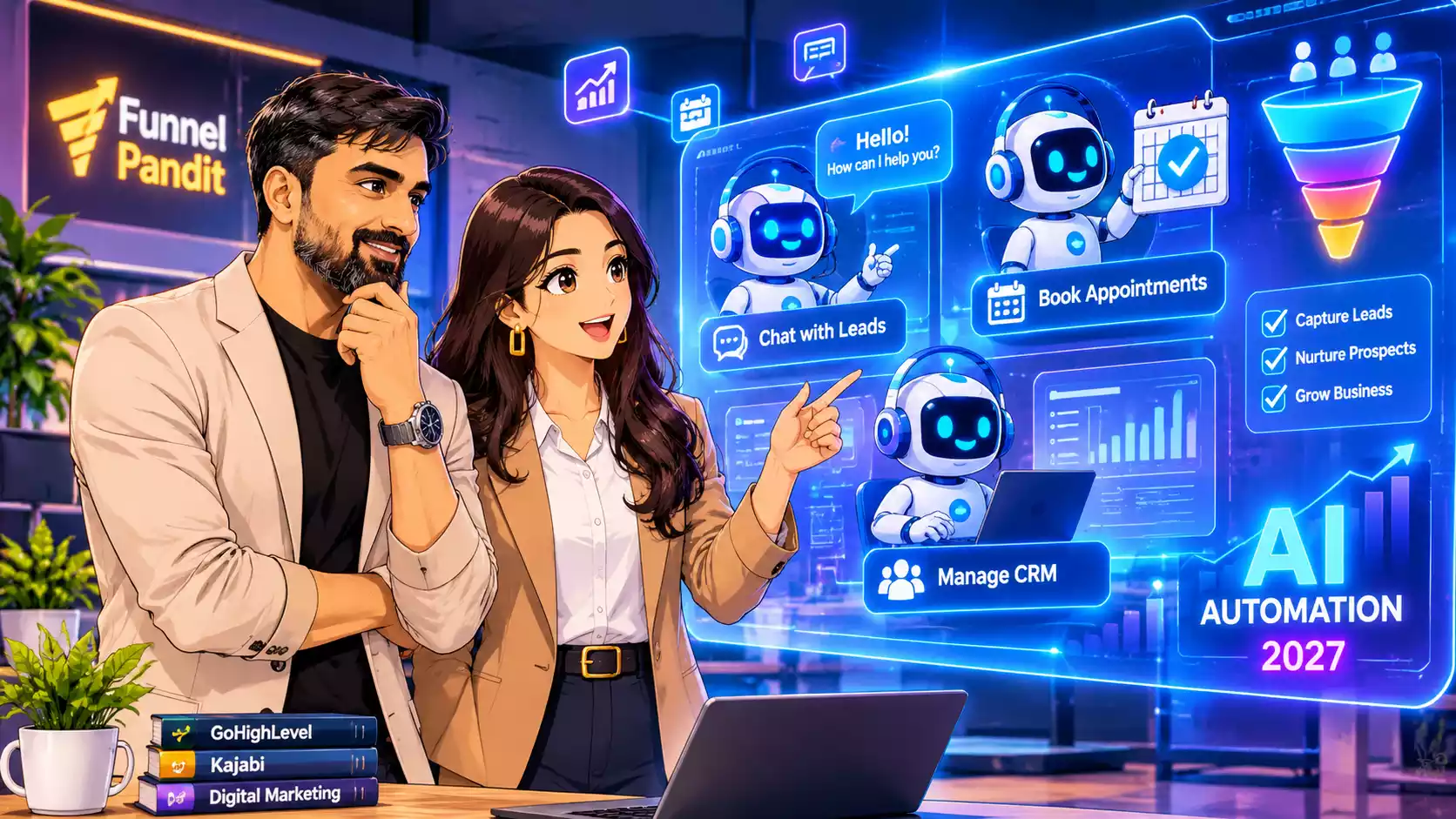
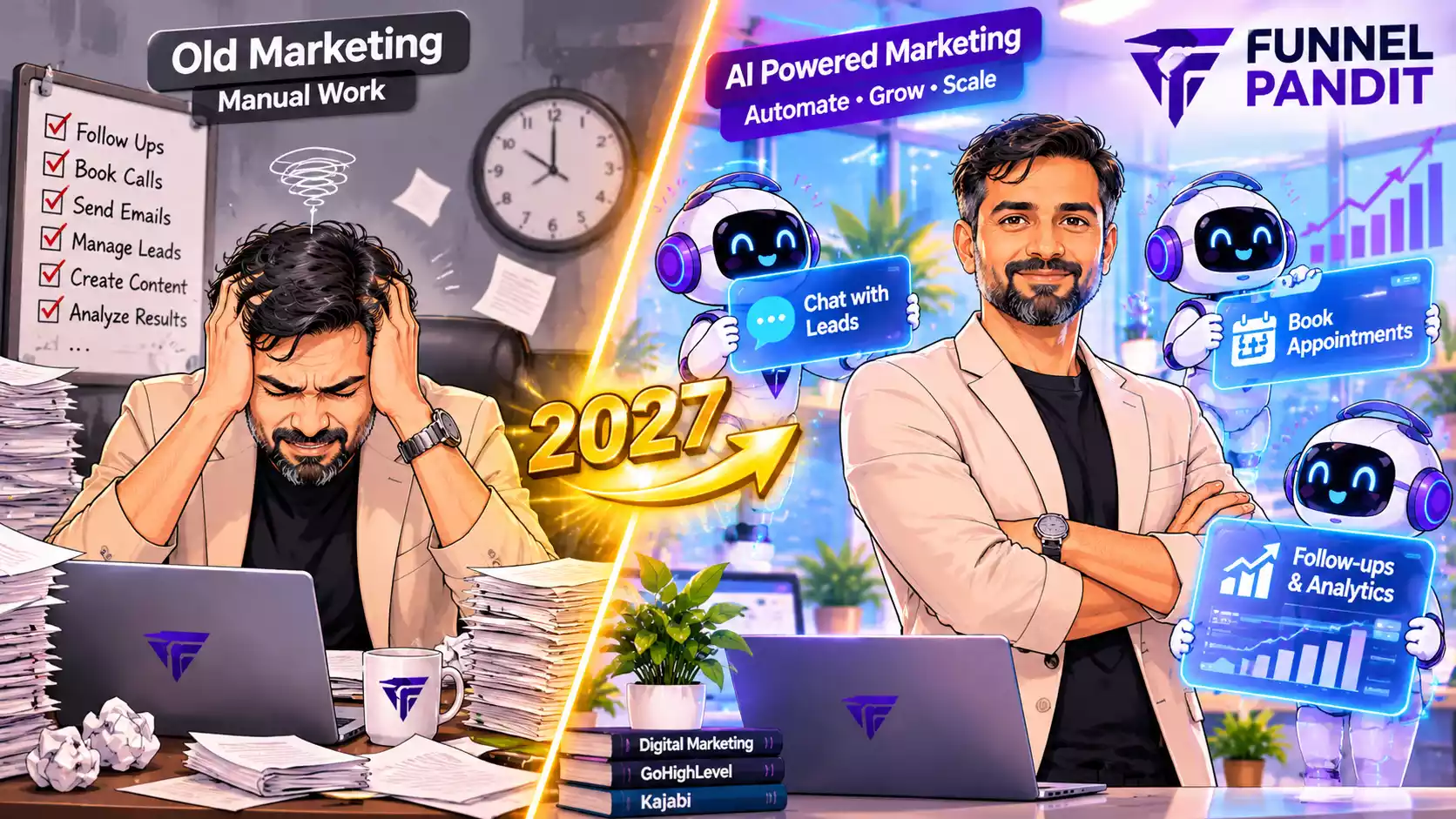
Agentic AI works differently. Instead of waiting for a prompt, an agent can:
Monitor new leads and start conversations
Qualify interest based on replies
Book appointments
Trigger follow-up sequences
Update CRM records
Escalate only when human judgment is required
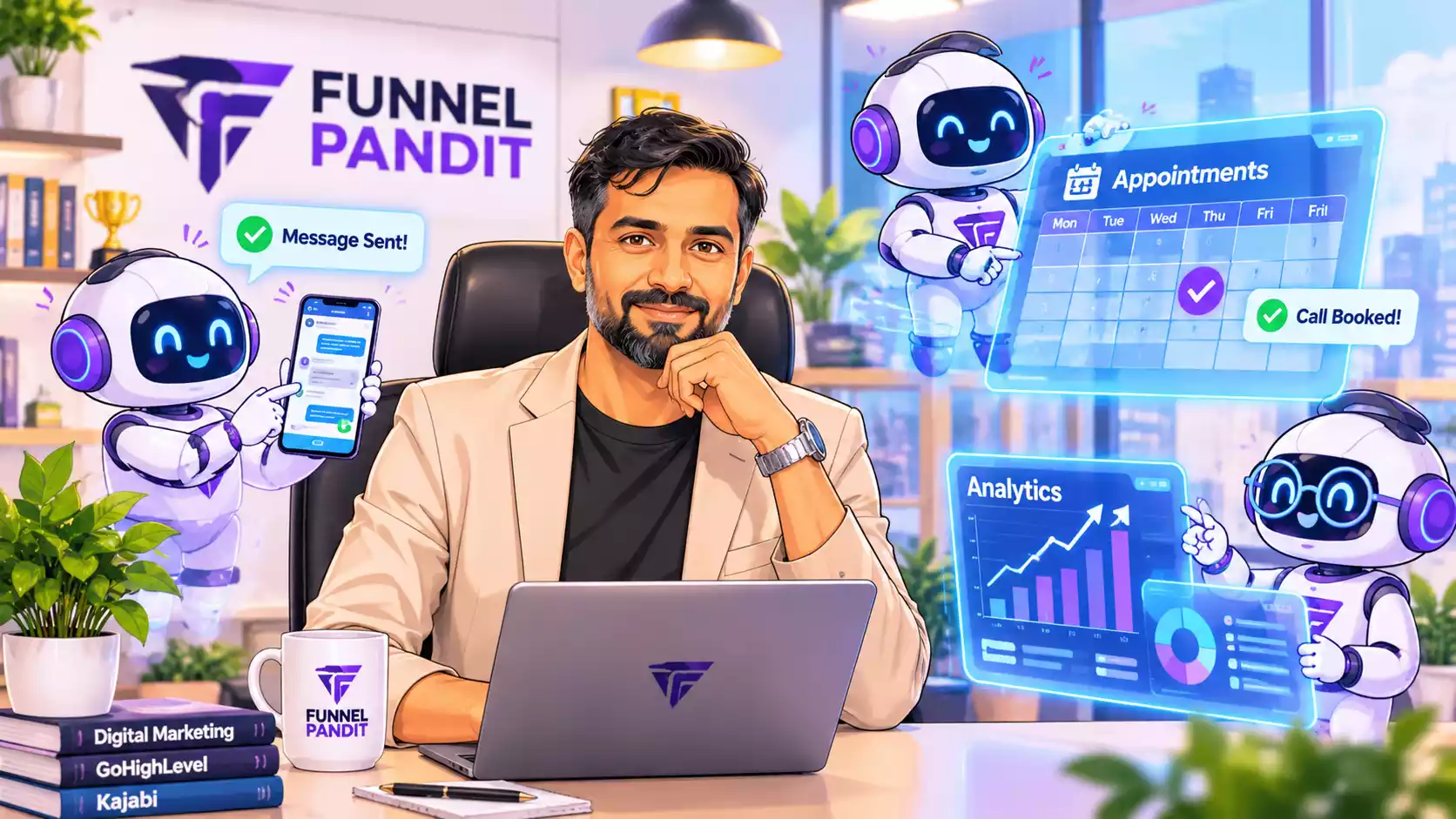
Managed Agents and advanced Conversation AI by GoHighLevel are early examples of this approach. Conversation AI is now capable of proactively reaching out to new leads. Managed Agents are now capable of handling more complicated and multi-step processes. It is not science fiction; it is already available and will grow from 2027 onwards.
Industry research supports the same direction. Multiple reports project that AI agents will influence a large share of B2B buying decisions and that brands will increasingly use agentic systems for one-to-one interactions. At the same time, many agent projects are expected to fail because of poor data, unclear goals, or lack of human oversight.
That gap between possibility and practical execution is where most businesses will either gain an advantage or waste money.
What Still Works (And What Is Becoming Less Effective)
Effective offers, good messages, and follow-ups are much more important than any technology. The ability of an AI agent to help with this is very limited. Companies which have clean data in their CRMs, defined sales pipelines, and described processes will get much better out of their agents than companies which just activate one additional feature.
What is becoming less effective:
Generic email sequences that ignore recent interactions
Manual follow-up that depends on one person’s memory
Disconnected tools that require constant copying of data
Content that sounds polished but lacks real experience or proof
What continues to work:
Fast response to new leads
Personalized follow-up based on actual behavior
Clear booking systems
Human involvement at high-stakes moments (pricing discussions, objections, closing)
The winners in 2027 will not be the businesses with the most agents. They will be the ones that design clear handoffs between AI and humans.
Practical Realities for Coaches and Agencies
Coaches and small agencies face a different reality than large enterprises. You usually do not have a data science team or unlimited budget. That means your approach must stay practical.
Here are the areas worth focusing on first:
1. Lead Response Speed
Most leads go cold within minutes. An agent that can text or message a new lead immediately, answer basic questions, and offer booking times creates a clear advantage. This is already possible inside modern CRM platforms.
2. Qualification and Routing
Not every lead deserves the same attention. Agents can ask a few smart questions, score interest, and either book a call or move the contact into a nurture sequence. This frees the coach or salesperson to focus on warmer conversations.
3. Database Reactivation
Most businesses sit on old leads that were never properly followed up. Agents can systematically re-engage past contacts with relevant messages instead of one-off manual campaigns.
4. Internal Efficiency for Agencies
Agencies managing multiple client accounts can use agents for routine tasks: reporting, basic client updates, or standard onboarding steps. This reduces the time spent on repetitive work.
What You Should Avoid
Launching every new AI-enabled capability without having any process in place is another mistake made often. The agents simply magnify your current system, so if your CRM is chaotic, your message is incoherent, or your proposition is not clear, the agent will just magnify all of that.
Other risks include:
Over-automating the early conversation so it feels robotic
Letting agents make commitments or pricing decisions without approval
Ignoring data privacy and consent rules
Measuring activity (messages sent) instead of outcomes (booked calls and closed deals)
Human oversight remains essential, especially in high-ticket coaching and agency work where trust is the product.
How to Prepare in the Next 6–12 Months
You do not need a complete transformation tomorrow. A staged approach works better.
Start with these steps:
Clean your CRM. Remove duplicates, fix incomplete records, and standardize key fields.
Map your current lead journey. Identify the exact points where delays or drop-offs happen.
Choose one high-impact use case (for example, instant lead response or appointment booking).
Set clear rules for when the agent should escalate to a human.
Track simple metrics: response time, booking rate, and show-up rate.
Platforms that combine CRM, messaging, calendars, and automation in one place make this easier. That is why many coaches and agencies are consolidating tools rather than adding more disconnected AI apps.
The Role of Systems Like GoHighLevel
GoHighLevel has been one of the most progressive platforms towards agentic principles. Tools like proactive Conversation AI, Managed Agents, Workflow Maps, and automation help users experiment with an agent-type process without having to start from scratch.
This does not mean every business should switch platforms. It does mean that any system you use in 2027 should support:
Centralized contact data
Two-way messaging
Conditional automation
Clear human handoff points
Room to add more intelligent agents over time
The specific tool matters less than the quality of the system behind it.
Final Thoughts
AI agents will not replace good marketing strategies in 2027. They will reward businesses that already have clarity, clean data, and disciplined processes.
The coaches and agencies that treat agents as force multipliers - rather than magic solutions - will gain speed and consistency without sacrificing the human relationships that still close deals.
If you have not already done so, the coming 12 months are your chance to make sure that you have got a streamlined and solid base in place. The technologies are progressing at an unprecedented rate. It is the companies that are prepared now who will make use of them effectively later on.
At Funnel Pandit, we help coaches and agencies build clean, practical systems on platforms like GoHighLevel so that automation and AI actually support growth instead of creating more complexity. If you want to review your current setup or plan a more agent-ready system for 2027, you can start with a short conversation.
Just Book a Call Now -